

How Do I Avoid a Locksmith Scam in Raleigh? Here’s a Quick Answer:
To avoid a locksmith scam in Raleigh, hire a locksmith who has a verifiable local address, answers the phone with a real company name, arrives in a branded vehicle, holds a valid North Carolina locksmith license, and attempts non-destructive entry before ever reaching for a drill. The strongest protection is to verify a locksmith’s license and reviews now, before you’re ever locked out.
Getting locked out of your home or business is stressful enough without wondering whether the locksmith you’re calling is legitimate. Locksmith scams have become more common across North Carolina, including right here in the Raleigh area. Fake locksmiths look for people in vulnerable moments, like when you’re locked out, running late, or dealing with an emergency.
At A Carolina Locksmith, we’ve heard plenty of stories from Raleigh residents who were taken advantage of by these operations. The good news is that most locksmith scams follow predictable patterns, and knowing what to watch for makes them easy to avoid. Below are five warning signs that should raise a red flag when you’re searching for a locksmith, whether it’s a planned service call or a middle-of-the-night home lockout.
1. No Local Address or Suspicious “Local” Listings
One of the most common tactics scammers use is pretending to be local when they’re actually run from out of state, sometimes from another country entirely. When you search for “locksmith near me” or “Raleigh locksmith,” you may see listings that look local but are really call centers that route your request to an untrained contractor.
Before you hire anyone, verify the company’s physical business address. A legitimate Raleigh locksmith should be able to give you a real local address, not a P.O. box or a vague location. Search that address to confirm it’s an actual business and not a random house or an address shared by dozens of other “companies.”
A Carolina Locksmith was founded in Garner, NC in 1992 and has served the greater Raleigh area ever since, including Cary, Garner, Clayton, Apex, and the surrounding towns. We’re a family-owned business rooted in this community, not a faceless call center in another state, and we’re proud to provide residential and commercial locksmith services with a real local presence.
2. Generic Company Names and Vague Phone Greetings
Pay attention to how a locksmith answers the phone. Scammers often use generic greetings like “locksmith services” or simply “locksmith,” with no specific company name. That vagueness lets them operate under several fake identities at once and makes them nearly impossible to trace if something goes wrong.
A legitimate locksmith answers with their actual company name and is glad to share details about their services, location, and credentials. If the person on the phone is evasive about basic questions or won’t clearly identify their business, treat that as a serious red flag.
3. Unmarked or Unbranded Vehicles
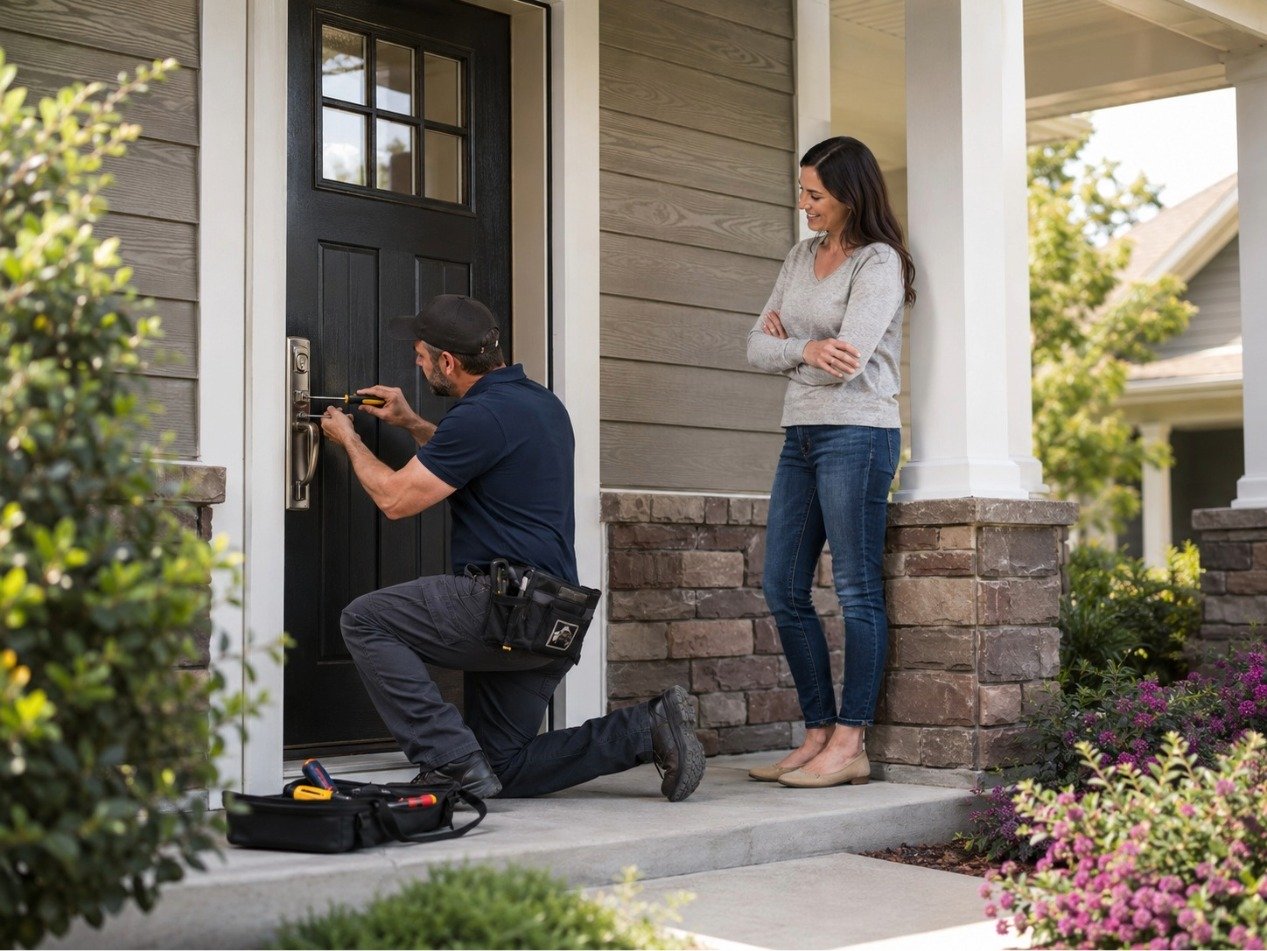
A professional locksmith company invests in its brand and protects its reputation. When your locksmith arrives, the vehicle should carry clear company branding with the business name, logo, and contact information. This is about accountability and professionalism, not just appearances.
Be cautious if someone shows up in an unmarked personal car or a plain van with no company identification. Scammers deliberately use generic, unmarked vehicles so they can’t be identified or traced later. A trustworthy locksmith wants you to know exactly who they are and how to reach them again for future service.
4. No License or Identification
North Carolina is one of the states that requires locksmiths to be licensed. That requirement exists to protect consumers and to make sure locksmiths have real training and accountability. In fact, providing locksmith services in North Carolina without a license has been a potential Class I misdemeanor since 2013, so hiring a licensed local locksmith isn’t just safer, it’s the law. When your locksmith arrives, don’t hesitate to ask to see their license and photo identification.
A reputable locksmith will show credentials without any fuss. A good one will also ask you for identification, to confirm that you own the property or have permission to access it. If someone refuses to show proper identification or gets defensive when you ask, send them away and call someone else.
You can verify any North Carolina locksmith’s credentials directly through the North Carolina Locksmith Licensing Board. For the record, A Carolina Locksmith’s NC locksmith license number is #1041, and you’re always welcome to check our team’s training and credentials. Any licensed locksmith in the Raleigh area should be properly registered and willing to prove it.
5. Insisting on Drilling or Replacing the Lock
Here’s something many people don’t realize: most experienced locksmiths can open the large majority of locks without drilling or causing any damage. Non-destructive entry is a fundamental skill that any trained locksmith should have.
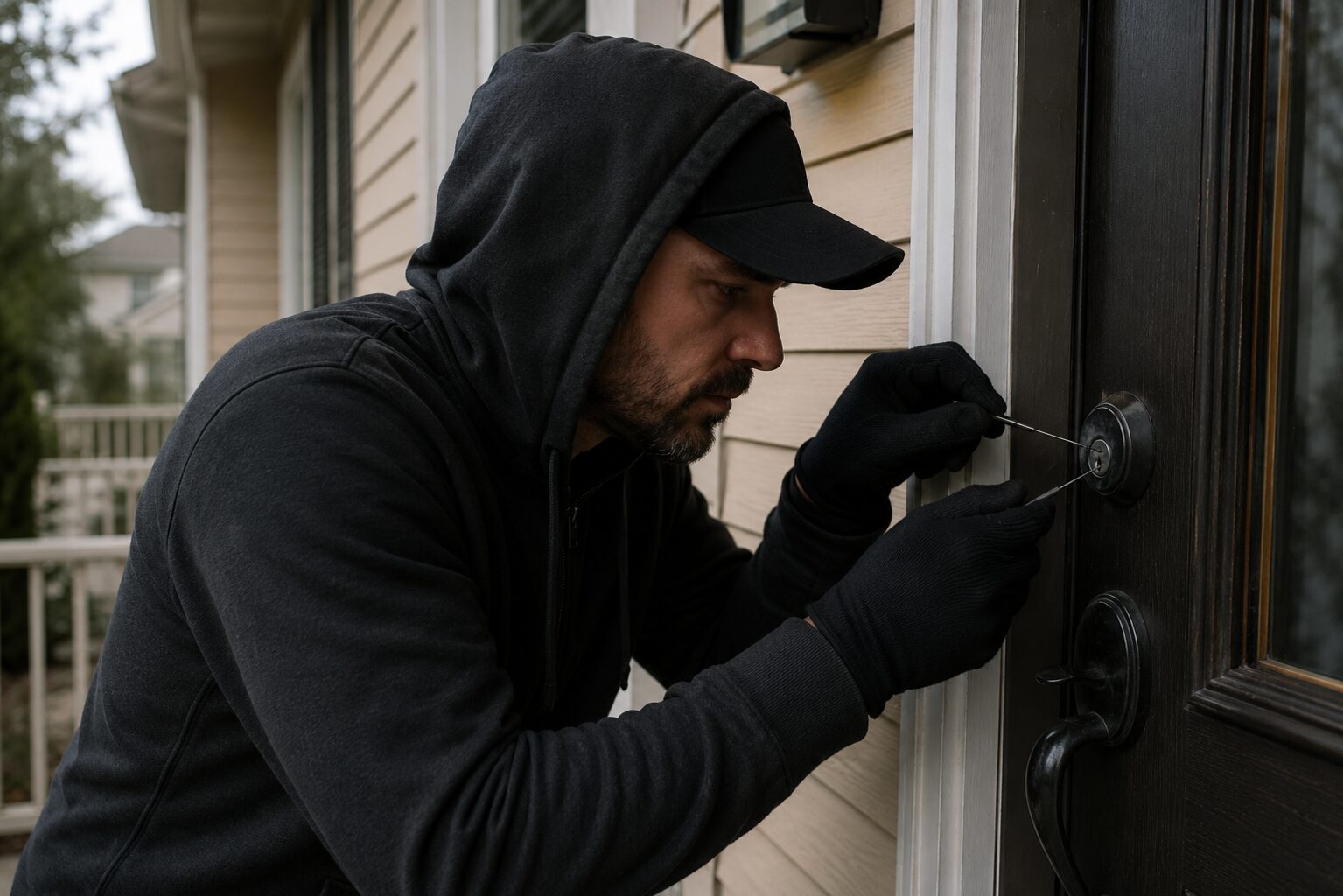
Be very suspicious if a locksmith immediately insists on drilling out your lock or replacing it entirely before trying anything else. That’s a classic way to pad the bill and manufacture unnecessary work. Drilling is occasionally necessary, usually for certain high-security locks or specific emergencies, but it should rarely be the first option a locksmith reaches for.
A skilled locksmith assesses your specific situation and explains your options clearly before doing anything. At A Carolina Locksmith, we take pride in using non-destructive techniques whenever possible, and we always explain the reasoning behind our recommendations. We also finish the job cleanly, so it looks like we were never there.
How Can I Find a Trustworthy Locksmith Before an Emergency?
The best defense against a locksmith scam is preparation. Don’t wait until you’re standing outside a locked door in a panic to start your search. Take a few minutes now to research local locksmiths in the Raleigh area, read their reviews, verify their license, and save a trustworthy company’s number in your phone.
Look for locksmiths with an established local reputation, genuine customer reviews, and transparent business practices. Check their Google Business Profile, read real testimonials, and confirm they have a genuine physical presence in the community. If you want a step-by-step approach, our guide on 7 tips to find a trustworthy locksmith walks you through exactly what to check.
Frequently Asked Questions
How can I tell if a locksmith is a scam?
Watch for a handful of red flags: no verifiable local address, a vague phone greeting with no company name, an unmarked vehicle, no license or identification, and pressure to drill or replace your lock right away. A legitimate locksmith is transparent about every one of these.
Are locksmiths required to be licensed in North Carolina?
Yes. North Carolina licenses locksmiths through the North Carolina Locksmith Licensing Board, and providing locksmith services without a license has been a potential Class I misdemeanor since 2013. You can look up any locksmith’s license on the Board’s website before you hire them.
Should a locksmith ask to see my ID?
Yes, and it’s a good sign when they do. A reputable locksmith will ask for identification to confirm that you own the property or have permission to access it. Skipping that step is a warning sign, not a convenience.
Is it normal for a locksmith to drill my lock?
Usually not as a first step. Most locks can be opened with non-destructive methods, so drilling should be reserved for certain high-security locks or specific emergencies. If a locksmith wants to drill right away, ask why before you agree to anything.
A locksmith quoted a low price on the phone, then charged much more. Is that a scam?
It often is. A common scam is to quote a very low price to get in the door, then demand far more in cash once the work is done, sometimes after unnecessary drilling. If your final bill doesn’t match the quote you were given, you can report the locksmith to the North Carolina Locksmith Licensing Board.
What should I do if a locksmith seems suspicious after they arrive?
Trust your instincts. You are not obligated to let anyone work on your property if something feels off. Politely send them away, then call a licensed, locally established locksmith instead. If you believe you were scammed, report the locksmith to the North Carolina Locksmith Licensing Board.
Need a Locksmith You Can Trust in Raleigh?
If you find yourself locked out in Raleigh, Cary, Garner, Clayton, or a surrounding community, A Carolina Locksmith is a locally owned, fully licensed, bonded, and insured locksmith serving the Triangle since 1992. Our goal is simple: to be the best locksmith in North Carolina by delivering honest, professional service on every call. We arrive in a company vehicle, provide proper identification, and treat you and your property with respect.
Don’t let the stress of a lockout push you into a scammer’s trap. Keep these warning signs in mind, trust your instincts, and never be afraid to say no if something doesn’t feel right. Your security and your peace of mind are worth protecting, both from the locks on your doors and from anyone who would take advantage of you.
Contact A Carolina Locksmith today for residential and commercial locksmith service across the greater Raleigh area. We’re the locksmith your neighbors trust.
Call A Carolina Locksmith: (919) 608-3694
A Carolina Locksmith 📍 422 St Marys St, Ste 2, Raleigh, NC 27605 📞 (919) 608-3694 🕐 24/7 Emergency Locksmith Service
A Carolina Locksmith is a family-owned, licensed, bonded, and insured locksmith serving the Triangle since 1992. Owner Gregory Godwin is a Certified Registered Locksmith (CRL) and a member of the North Carolina Locksmith Association. Serving Raleigh, Cary, Garner, Clayton, Apex, Knightdale, Holly Springs, Fuquay-Varina, and the surrounding Wake County communities.